
Plastic Fabrication & Industrial Materials
High-Pressure Laminates
Industrial laminates are made up of superimposed layers of reinforcing materials that have been impregnated with resinous binders and cured under heat and pressure.
Low-Pressure Laminates
Low-pressure laminates are composed of glass mat and/or glass roving fibers impregnated with polyester resins.
Thermoplastics & Elastomers
Thermoplastics constitute the largest assortment of resin formulations which when formulated are transformed into a variety of basic shapes.
Custom Machining and Distribution of Industrial Engineered Plastics for Over 55 Years.
High Pressure Laminates - Thermosets
Industrial laminates are made up of superimposed layers of reinforcing materials that have been impregnated with resinous binders and cured under heat and pressure.
The portions of reinforcements and resinous binders that are added alter the properties of these materials. Further alterations are accomplished by the addition of plasticizers, lubricants and flame-retardants.
These combinations of reinforcing materials and resinous binders vary but are most commonly identified by the following NEMA GRADES
NEMA Grade: X XX XXX XPC
These paper base laminates are generally applied where electrical rather than mechanical properties are of dominant importance. Phenolic is the most common resin system in paper base laminates.
NEMA Grade: C CE L LE
Cotton cloth laminates are usually chosen when mechanical strength greater than paper is required. A fine weave cotton is often used when machinability is important. Phenolic is the most common resin system in cotton base laminates.
G-3 G-5 G-7 G-9 G-10 G-11 FR4
Glass fibers as woven fabrics or mats produce the highest-strength laminates. They also have superior electrical properties (maintained under high temperature and humid conditions) and high temperature resistance. Resin systems include phenolic, melamine, silicone, and epoxy.
Many variations of high pressure laminates have been standardized, resulting in the establishment of more than 70 standard grades of laminates.
If more than one standard grade possesses the required properties, final decisions can be made by considering the most suitable form and by analyzing the economic aspects relating to that laminate grade and its machinability.

Low-Pressure Laminates - Polyester Glass
These laminates are composed of glass mat and/or glass roving fibers impregnated with polyester resins. They are molded under moderate pressure or are pultruded through a die that determines their shape. Generally, the color range for laminates in basic sheet form is cream to beige, red, and light brown.
GPO-1
GPO-1 is an economy grade fiberglass mat reinforced thermoset polyester molded material sheet. This material exhibits good punching characteristics.
Typical applications for GPO-1 include transformer spacers and supports, motors, and other general purpose electrical and mechanical applications.
GPO-1 is easily fabricated and cost-effective.
The standard color for this material ranges from cream to beige with a thickness range of 1/32" to 2".
GPO-2
GPO-2 is a flame-resistant fiberglass reinforced laminate with a thermal class 130 C electrical / 160 C mechanical material. It is UL recognized with a flame rating of 94V-O.
GPO-2 is typically used in general purpose electrical insulation applications where flame-retardant material is required. The standard color on this material is red with a thickness range of 1/32" to 2".
GPO-2 is a cost-effective choice for use with terminal boards, control panels, switch plates, and other similar applications.
GPO-3
GPO-3 is a glass mat reinforced thermoset polyester molded sheet, which is both arc and track resistant.
GPO-3is a UL recognized grade and is highly flame retardant and low-smoke generating.
Typical applications for GPO-3 include high-voltage appliance insulators, bus bar supports, and barriers and mounting panels in switchgear, as well as other types of electrical applications.
The standard color on this material is red with a thickness range of 1/32" to 2".
NEMA Grade: High-Temp
This is a high temperature material which carries a UL thermal recognition of 220 C electrical / 210 C mechanical.
This qualifies as a Class R material.
This material is used in elevated temperature applications where high strength NEMA GPO-1 is required.
H1000 1130 NYCTA material
Haysite Grade 1000 laminate sheet is an outstanding material that is used in applications requiring exceptional weather and corrosion resistance. Grade H1000's unique polyester resin system provides corrosion resistance in sunlight and harsh weather environments in addition to meeting NEMA GPO-3 specifications for track resistance, flame retardance, heat resistance and physical properties. H1000 is particularly qualified for applications in the transportation industry due to its' low smoke generation, low smoke toxicity & halogen-free flame retardants. H1000 meets the rigid New York City Transit - Specification #64. Transit Authorities use Grade H1000 under their 3rd rail ties to provide electrical insulation, corrosion protection, UV resistance & most importantly to insure low smoke/flame toxicity in case of electrical failure. H1000, in a pultruded profile shape is used for electrical insulation for electrical cables, conduit & 3rd rail protection for workers.
Aside from the stock sheet sizes listed above, polyester glass is also supplied in profile shapes to meet any number of electrical and structural requirements.
They can be molded or pultruded into angle, channel, I-beam, rod and tube configurations.
Typically, these profiles are used to support and electrically isolate components in power and distribution equipment.


Thermoplastics & Elastomers
Thermoplastics constitute the largest assortment of resin formulations which when formulated are transformed into a variety of basic shapes.
Although fillers can be employed, the thermoplastics are self-supporting homogeneous materials which do not require reinforcing sub-straits.
Among the properties of thermoplastics are resistances to impact, corrosion, mechanical stress, wear, etc. Because of the vast array of thermoplastics available, application parameters are used to select the best type or grade.
Urethane Elastomers are a group of thermosetting and thermoplastic materials often mistaken as rubber.
These materials are unique in that hardness and additives may be combined to acquire certain properties not possible in other non-metallic materials such as strength, cut and tear resistance, sound deadening properties, and defense against abrasion and impact.
Other commonly used names for Thermoplastic Materials
- ABS
- ACETAL
- ACETATE
- ACRYLIC
- BUTRATES
- CAST NYLON
- CELLULOSE
- PEEK
- PVC & CPVC
- POLYCARBONATE
- POLYETHELENE
- PVDF
- PPS
- PET
- POLYPROPYLENE
- POLYSTYRENE
- POLYSULFON
- POLYURETHANE
- UHMW
- NYLON
- POLYIMIDE
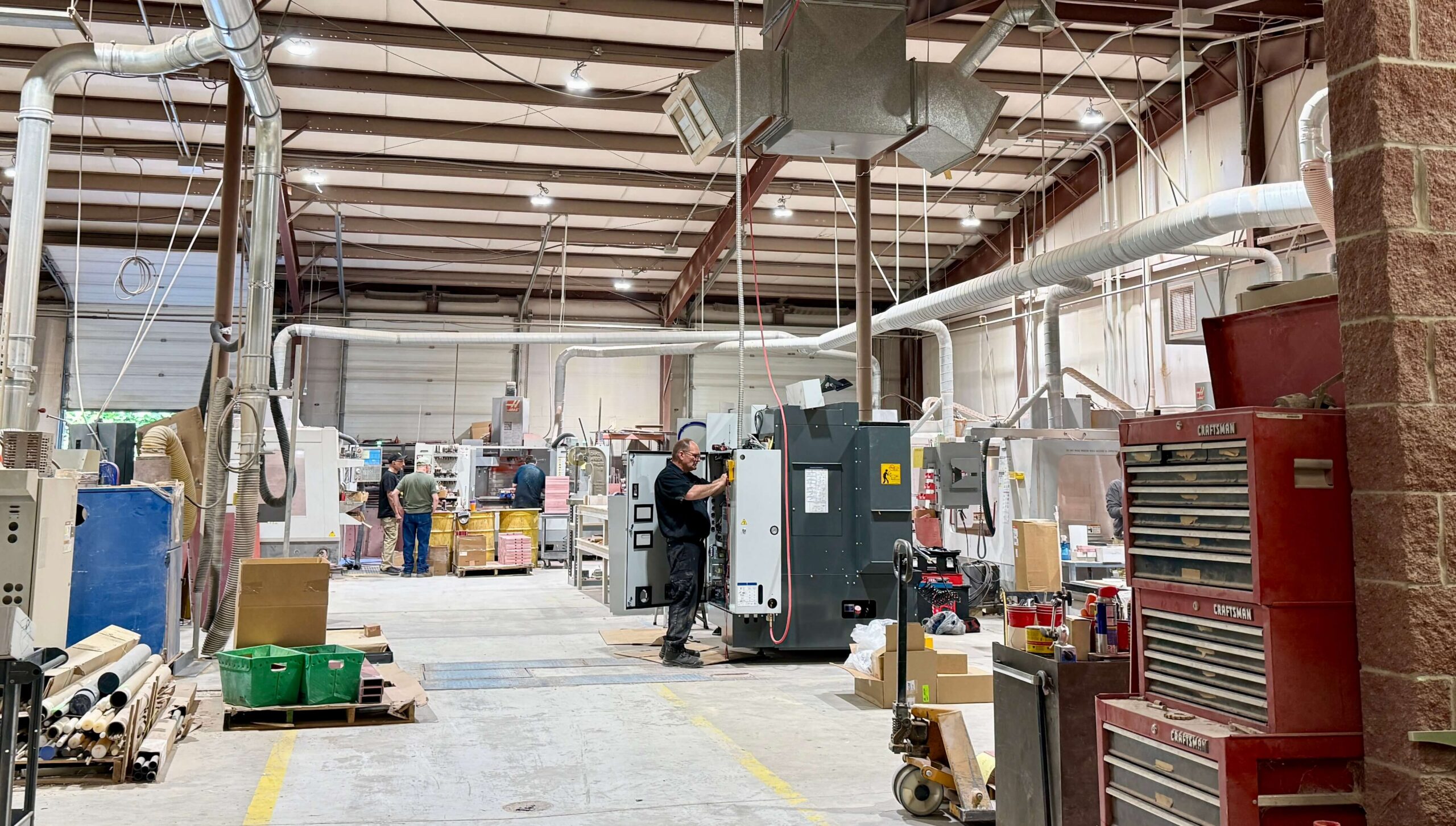
FPI distributes materials in a variety of basic shapes and can customize the materials with CNC machining and fabrication